3D Printing in Healthcare: A Revolution in Treatment and Surgery
The healthcare industry is continuously evolving with advancements in technology, and one of the most exciting innovations in recent years is 3D printing.
The healthcare industry is continuously evolving with advancements in technology, and one of the most exciting innovations in recent years is 3D printing. Often associated with industries like manufacturing and design, 3D printing has found a powerful application in medicine, revolutionizing how doctors approach surgery, prosthetics, and patient care. In California’s Central Valley, where access to specialized treatments may be limited, 3D printing is proving to be a game-changer, providing new opportunities for customized care and more effective treatment options for patients.
How 3D Printing Works in Healthcare
3D printing, also known as additive manufacturing, is a process in which material is laid down layer by layer to create a three-dimensional object from a digital model. In healthcare, this technology is used to create highly detailed models and functional objects such as prosthetics, implants, and even surgical tools.
The process begins with creating a digital 3D model of a patient’s anatomy, often based on medical imaging like CT scans or MRIs. Using this model, a 3D printer can create a physical object that is a perfect replica of the area being treated. Whether it’s a custom prosthetic limb, a model for pre-surgical planning, or a personalized implant, 3D printing offers the precision and customization that traditional methods cannot.
Personalized Prosthetics and Implants
One of the most remarkable applications of 3D printing in healthcare is the creation of personalized prosthetics. Traditional prosthetics often have a one-size-fits-all design, requiring patients to undergo a lengthy fitting process and make adjustments over time. In contrast, 3D-printed prosthetics can be custom-made to fit the individual’s body perfectly, leading to improved comfort, functionality, and overall quality of life.
For patients in the Central Valley, where specialized prosthetic services may not be readily available, 3D printing offers a more affordable and efficient alternative. By using digital scanning techniques, prosthetists can create accurate models of a patient’s residual limb and print a prosthetic that fits perfectly from the start. This eliminates the need for frequent adjustments, reducing the time and cost associated with traditional prosthetics.
In addition to prosthetics, 3D printing is also used to create custom implants for patients with conditions such as bone fractures or joint replacements. For example, patients with complex skull fractures may need a specialized implant to restore the shape of their skull. Traditional implants are often mass-produced and may not fit the patient’s anatomy precisely. 3D-printed implants, on the other hand, are tailored to the individual, leading to faster recovery times and better functional outcomes.
Surgical Planning and Precision
Another groundbreaking use of 3D printing in healthcare is in surgical planning. Before performing complex surgeries, such as those for tumors, spinal conditions, or vascular problems, surgeons can use 3D-printed models to practice and plan the procedure. By printing a model of a patient’s organ or affected area, surgeons can better understand the unique structure of the problem, which helps them to visualize the best approach before making an incision.
For example, in spinal surgeries, where precision is critical, 3D-printed models of the patient’s spine allow surgeons to rehearse the procedure, identifying potential complications and reducing the risk of error. In cancer surgeries, 3D models of tumors enable surgeons to plan the most effective removal techniques, ensuring that surrounding healthy tissue is preserved as much as possible.
For patients in the Central Valley, where travel to top-tier medical centers may be challenging, having access to pre-surgical planning tools like 3D-printed models allows local surgeons to perform complex procedures with greater confidence and accuracy. This helps to reduce the need for patients to seek treatment outside of their community, which can be costly and inconvenient.
3D Bioprinting: The Future of Organ Transplants
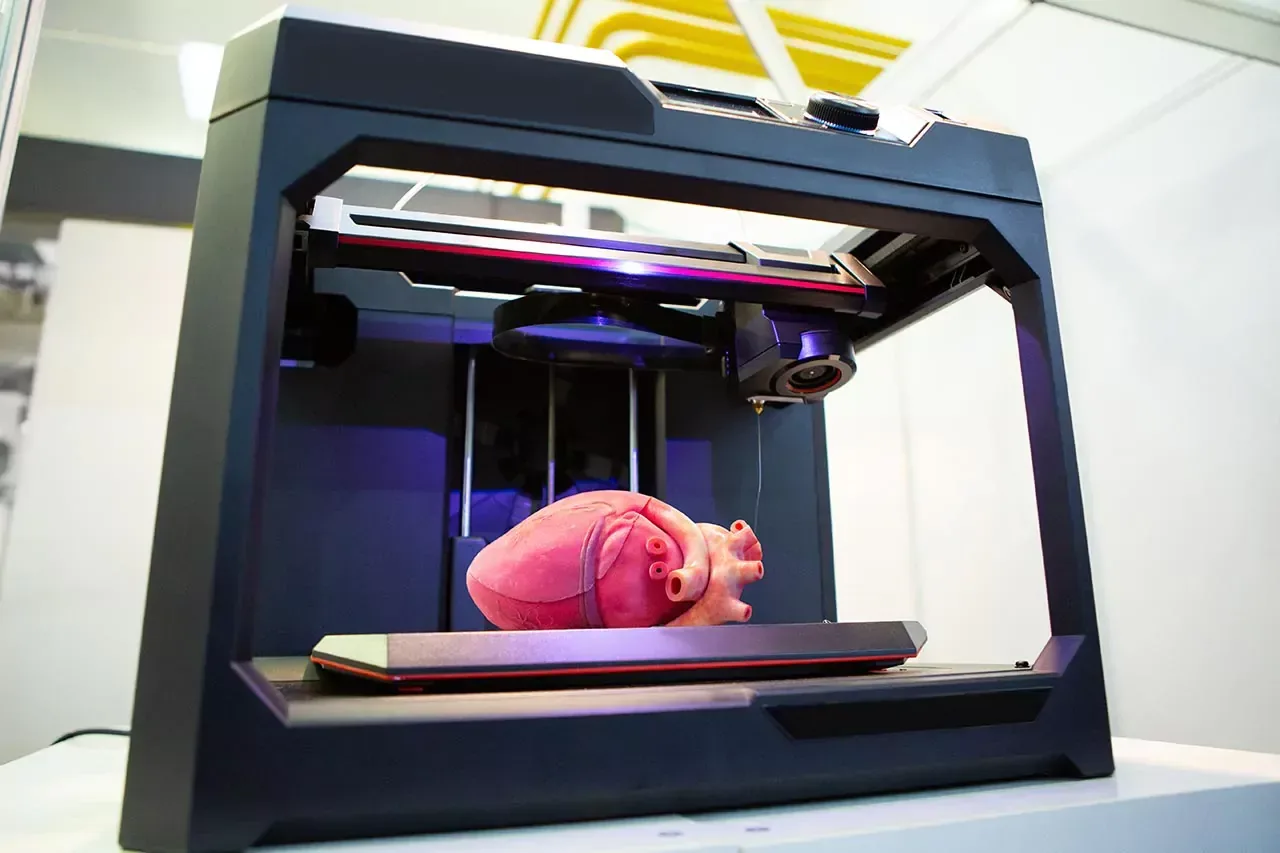
While still in the experimental stages, 3D bioprinting is one of the most exciting frontiers in healthcare technology. Unlike traditional 3D printing, which uses materials like plastic or metal, bioprinting involves printing living cells to create functional tissues and organs. The goal is to eventually print organs such as hearts, livers, or kidneys that could be transplanted into patients, eliminating the need for organ donors.
While we’re not quite there yet, the potential for 3D bioprinting is immense. In the future, patients who suffer from organ failure or severe tissue damage might not need to wait for a donor match, as custom-made, bioprinted organs could be produced specifically for them. In a region like the Central Valley, where organ donation lists can be long, bioprinting could provide an alternative solution for those in need of life-saving transplants.
Overcoming Barriers to Adoption in Rural Areas
While the possibilities of 3D printing in healthcare are exciting, the technology is not without its challenges—especially in rural areas like the Central Valley. The initial costs of 3D printing equipment and training can be prohibitively high, which means that many smaller healthcare providers may not have the resources to incorporate this technology into their practices. Additionally, regulatory hurdles exist when it comes to approving 3D-printed medical devices, especially for use in surgeries or implants.
Despite these barriers, there is growing momentum to bring 3D printing into mainstream healthcare. Initiatives at the state and national levels are aimed at reducing costs and increasing access to this transformative technology. As 3D printers become more affordable and healthcare facilities begin to recognize the value of personalized, precision treatments, the adoption of this technology will likely accelerate, benefiting rural communities like the Central Valley.
The Future of 3D Printing in Healthcare
The future of 3D printing in healthcare is incredibly promising. As the technology becomes more advanced, we can expect even more innovative uses, from bioprinting functional tissues to creating customized drug delivery systems. With ongoing research and collaboration between healthcare professionals and engineers, 3D printing will continue to revolutionize how we treat patients, offering them more personalized, effective, and affordable care.
In the Central Valley, the potential for 3D-printed prosthetics, implants, and surgical models to improve patient outcomes is immense. As the technology becomes more accessible and integrated into healthcare practices, it will offer patients in rural communities new possibilities for treatment and recovery.
Conclusion
3D printing is already making a significant impact on the healthcare industry, especially in areas like prosthetics, surgical planning, and personalized implants. In the Central Valley, where access to specialized treatments can be limited, 3D printing is offering patients more affordable, customized, and effective care. As the technology continues to advance, it holds the potential to change the way we approach treatment, surgery, and even organ transplants, ultimately leading to better health outcomes and enhanced quality of life for patients.
This article is for general information and isn’t a substitute for a visit with your doctor.